

A global luxury wine company uses an AI accelerator to rapidly replace a legacy grape quality assessment application with a modern, offline-capable solution.

From prototype to go-live

from the PhoenixDX team
from the TWE team
Our new Vineyard Assessment App gave us the opportunity to shift our mindset. It was more than a system replacement and encouraged us to rethink how we build and deliver tools. Rather than just building apps, the focus became on doing so more efficiently and intelligently.
Darren Yeo
Global IT Director – Strategy, Architecture and Delivery, TWE
Treasury Wine Estates (TWE) is one of the largest global wine producers, known for iconic brands such as Penfolds, which are loved by consumers worldwide.

At TWE, vineyard assessments play a crucial role in ensuring grape quality, supporting harvest planning, building grower relationships, and delivering commercial outcomes. The company’s existing vineyard assessment capability relied on old systems that were no longer maintained or supported, including Mobile Data Studio and an Access-based solution.
Paper-based vineyard assessment, grading, and data capture created significant operational inefficiencies, with duplicated effort and avoidable manual processes slowing teams down. Beyond the impact on productivity, manual transcription introduced data quality risks, increasing the likelihood of errors and inconsistencies. Reliance on paper records also limited traceability, making it difficult to track historical field visits and support informed decision-making. Assessors faced additional operational challenges due to inconsistent connectivity, limited ability to attach photos, and unreliable data synchronisation.
TWE’s Darren Yeo envisioned a different approach – a “digital factory” model where a reusable AI-powered platform could reduce 80+ bespoke tools into a streamlined set of fit-for-purpose applications delivered at speed with governance. The new Vineyard Assessment Application (VAA) became the first step in that journey.
After extensive evaluation, TWE selected the OutSystems low-code platform and PhoenixDX as its delivery partner. Leveraging OutSystems’ AI-driven legacy modernisation accelerator, the team delivered a production-ready field services application in just 8 weeks. The solution was built by a lean team comprising 1 developer and 1 designer from PhoenixDX, alongside key members of TWE’s internal Supply and Digital, Data and Technology (DD&T) team. Around 50% of the application was generated using AI tooling, significantly accelerating delivery while maintaining strong architectural consistency and governance.
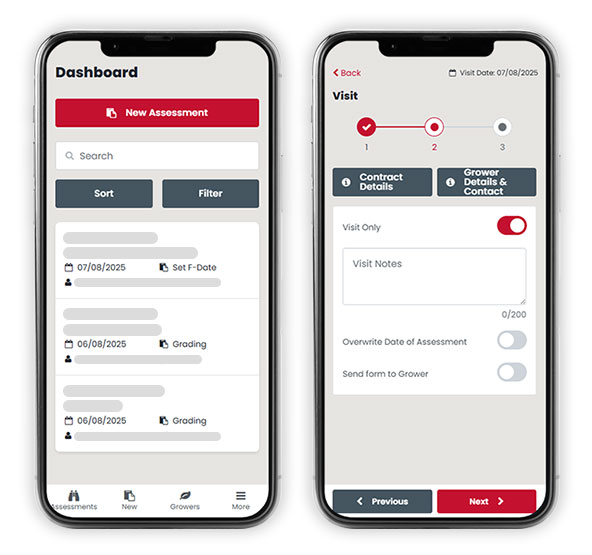
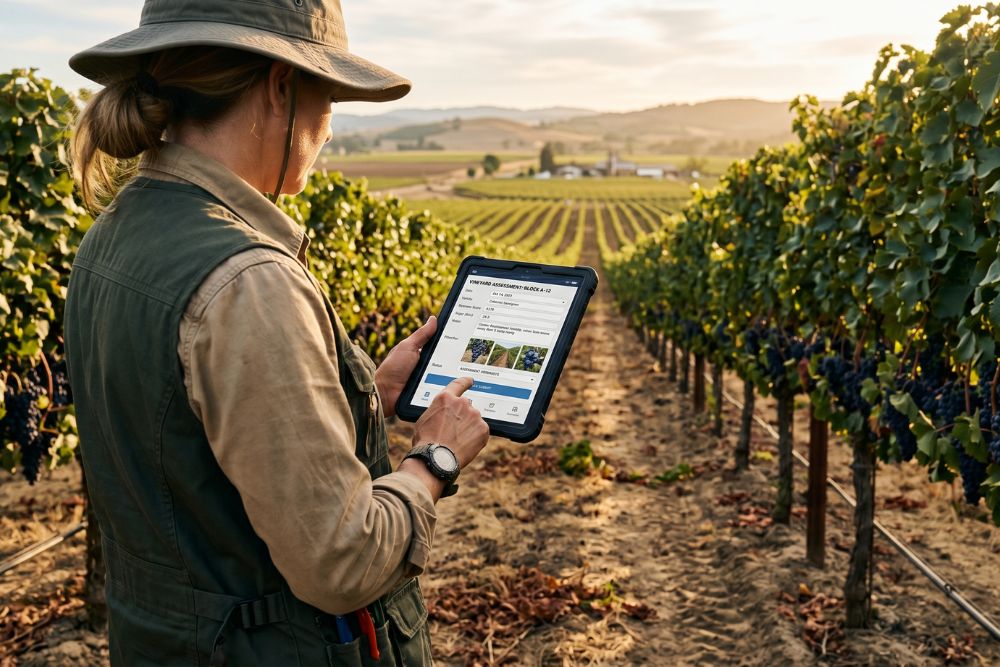
The new application enables a robust and efficient vineyard assessment solution by enabling accurate assessment recording with seamless photo and attachment capture, even when operating offline. Built-in user management and access controls ensure data security and role-based visibility, while reliable synchronisation and backend integration keep information consistent and up to date across systems. Comprehensive reporting and analytics transform recorded data into actionable insights, ultimately improving productivity, data quality, and decision-making across the operation.
The app is intuitive to the user with logical information capture and flow. It’s great to be able to input info directly from the field and know it instantly appears in the winemaking system. It saves me time as I no longer have to go back to the office and translate my hieroglyphics from my field notes.
Angus Davidson
Vineyard Manager, Supply Wine and Grape Sourcing Vineyard Ops, TWE
With training from PhoenixDX, TWE’s internal DD&T team quickly became self-sufficient and has already delivered multiple enhancements since the VAA was launched. The team can now resolve around 95% of issues internally, responding quickly and with confidence.
The collaboration between the DD&T team and business stakeholders has been equally transformative. Instead of waiting months for change, the business and IT teams now work closely together in real time, listening to users, resolving issues quickly, and rapidly releasing improvements. This level of responsiveness has significantly improved the pace and effectiveness of delivery.
The Vineyard Assessment Application was not just a modernisation project. It marked the beginning of TWE’s ‘digital factory’ vision: reducing reliance on fragmented tools and building fit-for-purpose applications rapidly, intelligently, and with governance in place.
The success of this first application demonstrated how AI-powered low-code can accelerate delivery, unify workflows, and support continuous improvement. It has provided clear proof that applications can be built faster, smarter, and with greater alignment with business needs.
The result is a blueprint for a more agile organisation: one that can streamline workflows, respond quickly to operational demands with new applications, and continuously evolve its technology to support growth and innovation.