
The launch addresses a growing challenge: while agentic AI accelerates development, it also increases architectural complexity and fragmentation, especially in legacy-heavy environments.
At the core of the approach is the Enterprise Context Graph: a dynamic, real-time representation of an organisation’s entire application landscape. It maps applications, data, workflows, and dependencies into a unified context, giving AI agents a high-fidelity understanding of how systems operate. This shared layer enables agents to generate, modify, and interact with software in a way that is aligned to business intent, while maintaining consistency, traceability, and governance across complex environments.
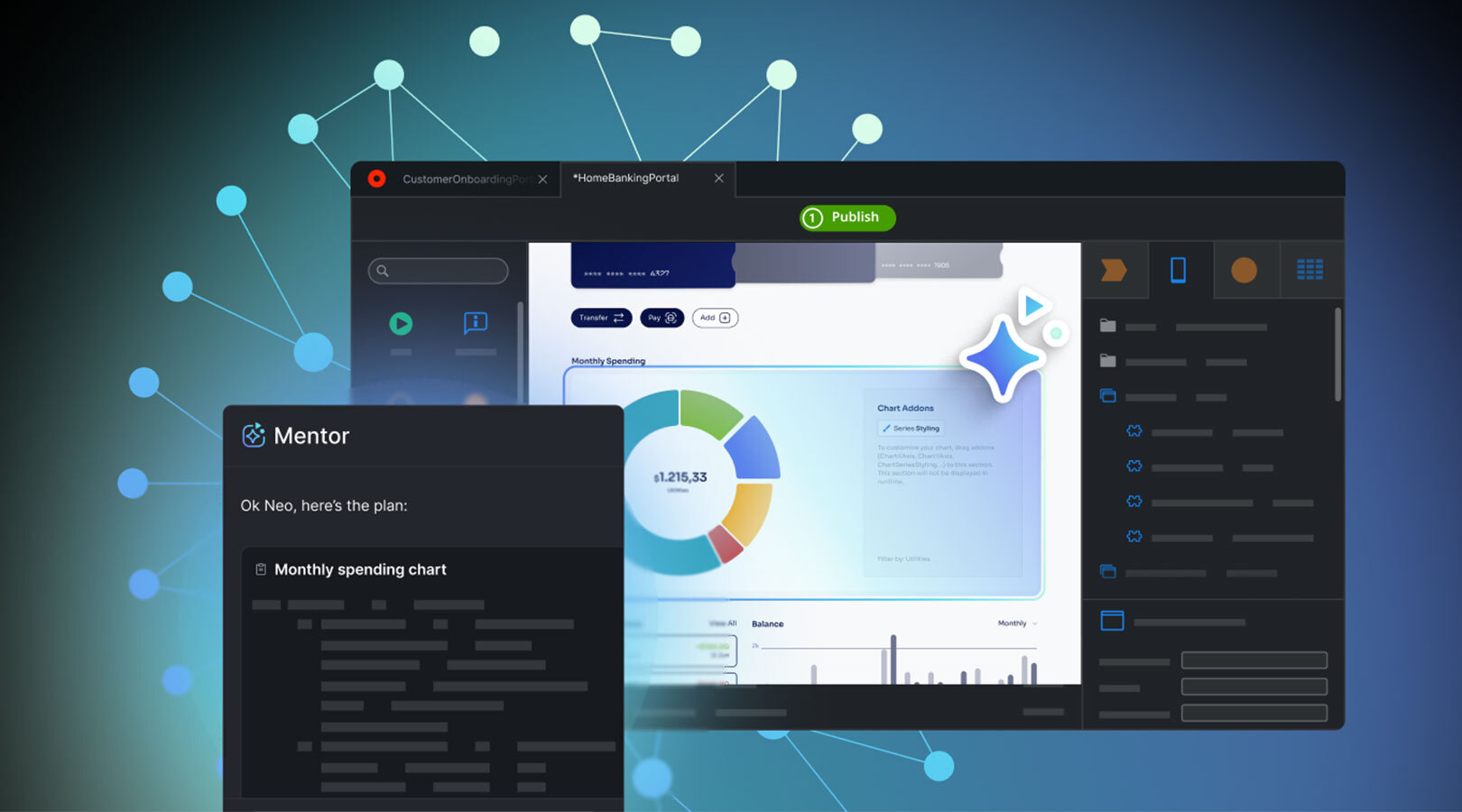
OutSystems also introduced the next-generation Mentor, its AI-powered development assistant, now deeply integrated into the development environment. With a highly conversational interface, Mentor enables teams to generate applications, data models, and workflows directly from prompts, while automatically applying architectural standards and best practices. By handling repetitive coding, documentation, and analysis tasks, Mentor allows developers to focus on higher-value design and decision-making, effectively shifting their role toward system architecture and oversight.
With an open ecosystem approach, organisations can leverage multiple AI tools while maintaining consistent governance and control.
Early adopters are already reporting faster delivery and improved productivity, with some achieving up to 50% reduction in development time.
The launch marks a shift toward more governed, scalable AI adoption across the enterprise.
