

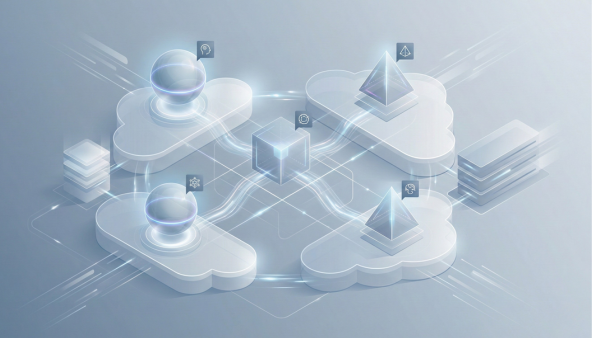
Enterprise applications are entering a profound transition. According to recent Gartner research, agentic AI will move enterprise software beyond productivity tools and into a new era of coordinated, goal-driven systems that reshape how humans and machines work together.
This shift is not theoretical. Gartner estimates CIOs and IT leaders have a 3-6 month window to define their strategy, investment posture, and operating model before agentic AI becomes a competitive differentiator rather than an experiment. The decisions made now will shape how effectively organisations compete, scale, and innovate over the next decade.
From assistants to agents: A structural shift in software
Most enterprises are already familiar with AI assistants. During 2025, AI assistants were embedded in nearly every enterprise application. These tools improve usability by acting as an interface layer – answering questions, summarising information, and helping users navigate complex systems.
But assistants are only the starting point.
Agentic AI represents a fundamentally different capability. Instead of responding to prompts, agentic systems pursue goals, coordinate actions, and execute multi-step processes across applications with limited human intervention. Where assistants augment users, agents orchestrate work.
This distinction matters. Organisations that treat agentic AI as “better assistants” risk missing the real value: workflow transformation, not UI enhancement.
The 4-stage evolution CIOs must plan for
Gartner’s research outlines a clear trajectory that enterprise applications will follow:
- Task-Specific Agents (2026)
Agents capable of executing defined end-to-end tasks – such as incident response, compliance checks, or operational reconciliation – will free teams from low-value work.
- Collaborative Agents (2027)
Multiple agents will work together across systems and data environments, coordinating decisions and actions for complex processes such as supply chains and financial operations.
- Agent Ecosystems (2028)
Networks of agents will orchestrate work across multiple applications, using enterprise systems as “engines” to achieve outcomes rather than destinations that users interact with directly.
- The New Normal (2029+)
At least half of knowledge workers will routinely create, govern, and work alongside agents as naturally as they use mobile devices today.
This evolution signals a move away from application-centric thinking toward outcome-centric orchestration.
Why does this change the CIO agenda?
Agentic AI does not simply automate tasks – it redefines enterprise architecture, governance, and skills.
Several implications stand out:
- Enterprise apps become engines, not experiences
In agentic ecosystems, users will no longer navigate multiple applications. They will express intent, and agents coordinate across systems to deliver outcomes. This shifts value from individual applications to platforms capable of orchestration, governance, and interoperability. - Governance becomes non-negotiable
Agentic systems will operate with autonomy. Without guardrails – human-in-the-loop controls, auditability, policy enforcement, and explainability – risk will escalate rapidly. Gartner warns that misunderstanding agentic AI is already increasing failure rates, security exposure, and compliance risk. - Standards matter more than models
As collaborative agents proliferate, interoperability will be critical. Emerging protocols such as MCP, A2A, and ACP will signal where the industry is heading. CIOs must plan for environments where agents communicate across vendors, clouds, and domains. - Skills and operating models must evolve
The “new normal” will not be fewer people – it will be different work. Teams will spend less time executing steps and more time designing workflows, governing agents, validating outcomes, and continuously improving systems.
Acting now: What CIOs should do next
The organisations that succeed with agentic AI will not be the ones with the flashiest pilots. They will be the ones who move NOW.
Gartner’s research points to several immediate actions:
- Anchor AI initiatives to business outcomes, not experimentation. Cost reduction, cycle-time compression, risk mitigation, and capacity expansion must be explicit.
- Target fit-for-purpose use cases using domain-specific models and workflows rather than generic agents.
- Invest in platforms that support orchestration, lifecycle management, and governance – not just model access.
- Prepare your workforce to design, govern, and collaborate with agents through structured enablement and continuous learning.
- Plan for ecosystems, not silos. Agentic AI will span vendors, partners, and platforms.
The bottom line
Agentic AI will not replace enterprise applications – but it will fundamentally change how they are built, used, and valued. The future belongs to organisations that treat AI as a system-level capability, not a feature.
For CIOs and IT leaders, the question is no longer whether agentic AI will reshape enterprise software, but whether your organisation is prepared to lead, govern, and scale it responsibly. The window to define that future is open now – and it won’t stay open for long.
That’s where PhoenixDX can help. We work with organisations to ensure their uptake of agentic AI is strategic, safe and chaos-free. Talk to us.
