Going mobile? Get it right the first time

Mobile is a must-have in today’s world
Mobile device usage has risen exponentially, heightened by the pandemic. Today, mobile devices cater for almost everything you can imagine - fitness, personal finances, news, entertainment and games, video, social media, travel, business and work, to name a few. It's estimated that 96% of internet users access the internet via a mobile phone. Everybody has a mobile.
Most organisations recognise that the growth and success of their business relies on mobile-friendly applications. They not only need to offer digital services to customers, but must also run internal processes such as field services and workflows. This demand creates challenges for IT leaders. It’s no longer enough to have a responsive website. Functionalities made for mobile, such as push notifications, calendar integration, offline capabilities, and voice and face recognition, are expected by users - employees, customers or contractors. However, creating software for mobile devices requires a specific investment of time, skills, and resources.
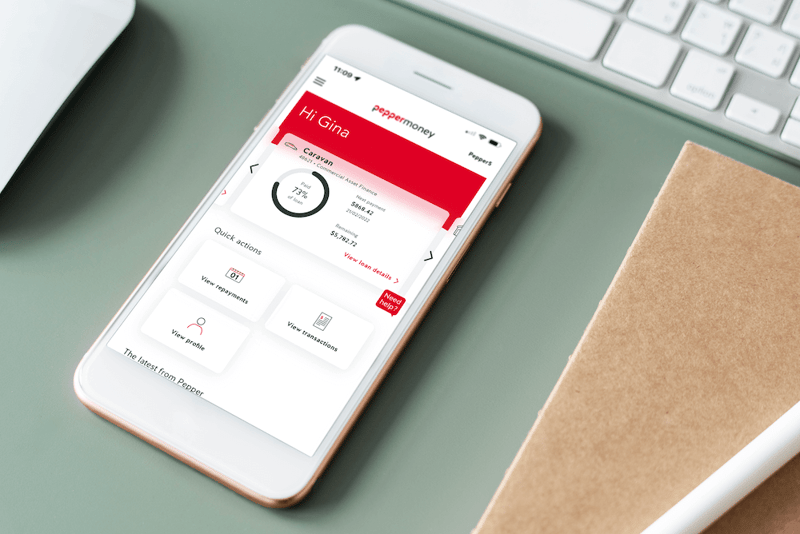
To target mobile users, you must develop native iOS and Android apps, right?
Not necessarily. Progressive web apps (PWAs) offer an attractive alternative. PWAs give you the tools to deliver a mobile app experience using simpler, everyday programming languages such as HTML, CSS and JavaScript. These apps are fast, work offline, and 'install' on the device's home screen as an app icon.
PWAs are a great choice for apps that don’t need to use advanced device capabilities or rely on app stores for distribution. Another benefit is that they can run on a wider array of devices, since they use fewer resources.
You can learn more about PWAs vs. Native apps in this ebook.
What is the best approach to developing a mobile experience?
It's important that a mobile app doesn't just meet today's needs but can continuously adapt to work optimally on the mobile phones of tomorrow. Users expect mobile apps to deliver on performance, privacy, security, offline capabilities and more.
Traditional approach
If your mobile app needs to deliver advanced device capabilities (e.g. calendar, contacts, browser, bookmarks) or support for demanding hardware usage (e.g. fingerprint or face recognition), you must build it natively.
However, using the traditional approach to mobile development can be expensive, time-consuming and difficult to evolve. Building and keeping these applications consistent, tested, documented and performing well requires an army of developers, software engineers and DevOps management.
If you want your app to be available for iOS and Android, the business traditionally needs to build two mobile applications - one for each operating system - using two completely different programming languages, e.g. C# and Java. If your application needs to be available on your business website, it usually requires a separate team, which can triple your development costs. Because hard-coded solutions are time-consuming, the backlog of new features and updates grows, and the IT team can never keep up.
Development platforms
An increasingly popular approach to building a mobile app is to use a development platform to simplify and speed up the process. However, there is a veritable jungle of mobile development platforms, so it can be hard to know which to choose. Not all development platforms deliver the same capabilities or meet all use cases. Many platforms seem impressive at first glance, but a closer look can reveal serious shortcomings.
Most of the available development platforms are not designed for enterprise-grade businesses. Security, DevOps, and integration are among the key challenges. Usually, mobile apps need to share data from the business's internal systems, meet high-security standards, make transactions across various APIs and share components.
Many platforms offer limited features and functionality, with simplistic, poor-quality user interfaces (UIs), making it difficult for businesses to deliver the service and experience they envision for their users.
Some development platforms struggle to build apps that load quickly and scale to thousands of users, leading to performance issues.
Many platforms can’t deploy web, PWA, Android, and iOS from the same codebase. OutSystems stands out as a high-performance, enterprise-grade low-code platform that delivers world-class mobile applications in record time.
Lessons from our mobile customers
A global enterprise spanning 19 countries and supporting clients with business advisory and group buying services initially had a rough experience going mobile. The organisation had developed a native Android mobile application from scratch. It had performance issues and was costly to maintain and enhance. The mobile app was slow to load and could not scale to support the growing number of users. In just 10 weeks, with the OutSystems platform + PhoenixDX’s team, the organisation developed a world-class mobile app that loads in seconds and connects a growing base of 30K+ users.
A non-traditional lender spent significant time and money developing web applications using Salesforce. The platform couldn’t deliver the functionalities and sleek user experience (UX) they were looking for. With the OutSystems platform + PhoenixDX’s team, they built a universal customer portal that operates seamlessly across mobile and web in just 12 weeks, allowing customers to manage all their loans in one place.
An electrical trade wholesale distribution business had built an application using Appswiz. The app could no longer meet its business needs - it was too slow, and they couldn’t expand its functionality. They needed to integrate their customers' existing accounting platforms, as well as their own online shop and inventory management system, into the app. Working with PhoenixDX + the OutSystems platform, the company built a progressive web application (PWA) that automates tradies’ business from end-to-end.
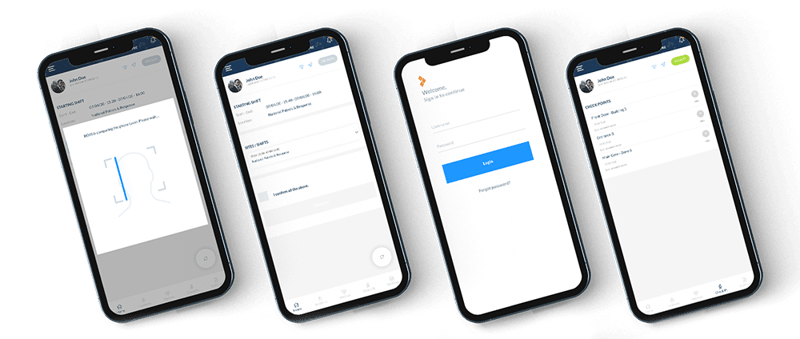
How does OutSystems support rapid mobile development?
Developing a custom mobile application can be easier, faster, and more affordable than you think with OutSystems and a highly skilled team like PhoenixDX. OutSystems is not just a mobile application development tool; it's a high-performance, enterprise-grade development platform that can deliver mobile and web applications for thousands of users, integrated with any system.
One single code base. The same squad delivers PWA, iOS, Android and web
Mobile apps delivered with OutSystems are deployed in one click on web, iOS and Android devices. They cater for different form-factors using a single code base. There is no need to adapt the code for different devices. With the OutSystems platform, back-end developers can build front-ends, front-end developers can build back-ends, and all developers can automate workflows. There’s no wall, no sticking point, no tool switching.
Deliver quicker, build cost-effectively and reduce maintenance costs.
Mobile apps delivered with OutSystems are deployed in one click on web, iOS and Android devices. They cater for different form-factors using a single code base. There is no need to adapt the code for different devices. With the OutSystems platform, back-end developers can build front-ends, front-end developers can build back-ends, and all developers can automate workflows. There’s no wall, no sticking point, no tool switching.
Easily create amazing UX
OutSystems includes a fully-integrated UI framework that provides customisable themes for your mobile apps, together with a huge library of samples and patterns that will allow you to rapidly develop beautiful mobile apps with a pixel-perfect look and feel.
Offline capability
OutSystems provides all the tools you need to build applications that run offline or in poor network conditions. Solutions built with OutSystems automatically store all of the apps’ content on the user’s device for performance and offline access and you can control what data goes to the mobile device.
Quickly scale, expand and modernise your apps
OutSystems easily incorporates AI, touch ID, facial recognition and other cutting-edge technologies into your apps. You can easily scale up to millions of users, while maintaining high performance, without additional development. A component-based architecture ensures integrity and reusability. Your apps seamlessly and securely integrate with other systems, expanding functionalities.
Secure your mobile apps
Deploy your apps in a secure runtime environment. OutSystems’ built-in application lifecycle management capabilities promote a clear assignment of responsibilities in the DevOps processes, laying the foundation for a secure Software Development Lifecycle (SDLC).
Find out more about what we do and the benefits of the OutSystems platform.