Technology plays a leading role in driving growth and fueling innovation.
Companies need to respond quickly to changing customer expectations and market forces to compete effectively. Here’s how IT can drive innovation.
1. Create the software you need
To differentiate your company’s products and services from your competition, you need to be able to create your own software. Using off-the-shelf software packages and Software as a Service (SaaS) for innovation can limit your ability to deliver the solutions your business needs to succeed.
2. Innovate effectively
To keep pace with creativity and innovation, you must be able to quickly build applications that are modern, flexible, scalable and affordable without needing an army of developers. This can be challenging using traditional code. A high-performance, low-code enterprise-grade application platform, such as OutSystems, offers you an integrated approach to the entire application lifecycle.
3. Shape ideas before building
IT can lead a collaborative process with the business, engaging UX professionals in the concept phase to help develop a solid macro business case to validate your solution. By prototyping solutions involving the right professionals, you can start small, validate first and scale fast, saving time and money.
4. Reduce time-to-market
Accelerating delivery and reducing time-to-market are pivotal factors for success while innovating. According to the Boston Consulting Group (BCG) 2023 Global Survey, the top obstacle to innovation performance is that 42% of companies take too long to develop ideas.
A modern application platform like OutSystems can simplify development without sacrificing governance, security and reliability. A small and experienced team can deliver reliable applications in weeks, not months.
5. Spend less on technical debt + more on innovation
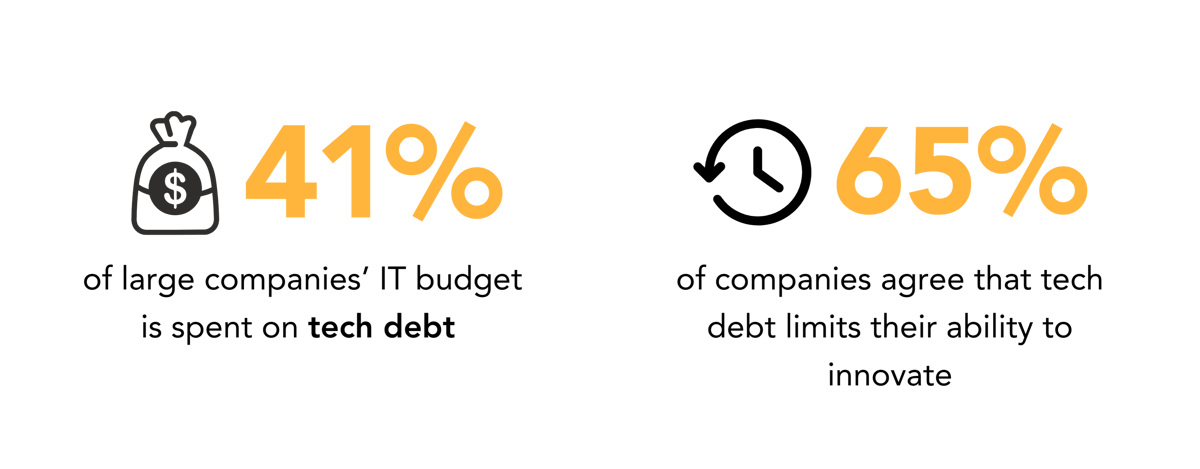
Outdated technologies and technical debt consume resources, time and energy, preventing companies from investing in innovation. According to a recent OutSystems survey:
Using the OutSystems platform, companies can simultaneously reduce their existing technical debt and build innovative new applications aligned with their priorities.